Minecraft Dungeons II guide
Give your first build one clear job
For a first build, choose survival as the default job: use gear that keeps you in the fight, then add damage or party utility when a piece clearly supports it. Dungeons II does not lock you into a class, so change the job when your group needs something else.
Damage, survival, and utility are planning labels, not official classes or a ranking. They help you read the expanded loadout without treating an early item as a permanent build.
On this page
Use survival as the default
Start with survival when you are learning enemies, controls, and new gear layers. It gives a new player room to notice what the party needs before committing to a more specialized idea.
Read a new drop by its job
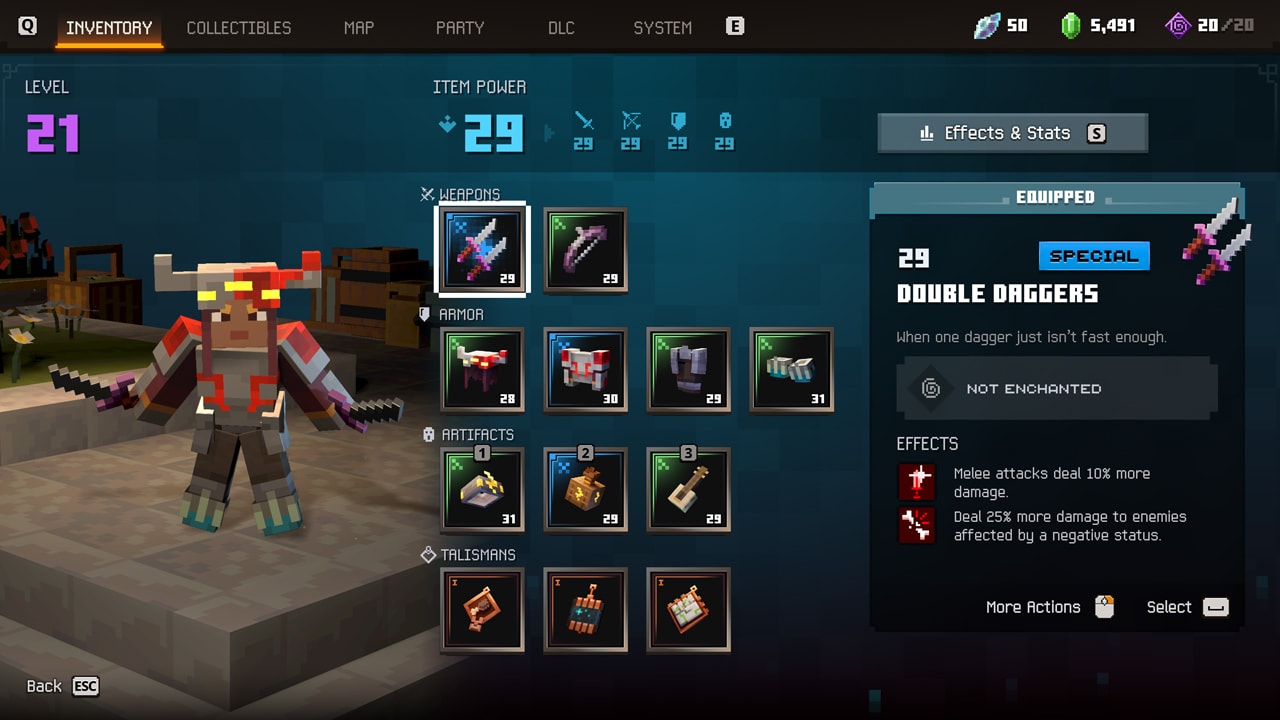
Ask whether a piece helps you stay active, deal damage, or support the party. Then check its slot, passive bonus, and enchantment effect before deciding whether it belongs in your current plan. The game uses a gear-defined hero, so a piece of gear can change the job you want to play.
Use what you can observe in the first few fights. If you are going down often or spending most of the fight retreating, favor a survival-facing effect. In the June publisher demo, the writer used an enchantment that could create a healing area after a kill, and a bone talisman that summoned a dog companion. Those are useful examples of recovery and extra help in a fight; they do not promise an early drop or a required opening setup.
Switch toward damage when the party is staying active but fights are taking too long. Switch toward utility when everyone can stay alive and deal damage, yet the group is missing a useful effect for the situation. Every player still needs to stay safe; these labels help a group decide what to look for next, not assign one person all of the survival work.
Use a flexible four-player example
In a four-player party, give every player a survival baseline, then let damage or utility choices grow from the drops and gaps the group can see. Any player can change jobs between sessions; use the examples to check coverage, not to assign one person all of the survival work.
- Every player keeps enough survival to stay in the fight.
- Players who are steady can favor damage when gear supports it.
- A player can add a helpful effect when the party needs one.
- Recheck the gap the whole group actually feels.
Know when to switch jobs
Switch from survival to damage when the group is comfortably finishing fights and a new piece gives you a clear offensive contribution. Switch toward utility when the party already has enough damage but lacks a useful effect or a player wants to support the group.
Keep planning: Read the gear layers · See a preview synergy example